Horse Racing Going Explained: How Ground Conditions Shape Results
 Available in US
Ground Beneath the Hooves: Why Going Matters More Than Most Punters Think
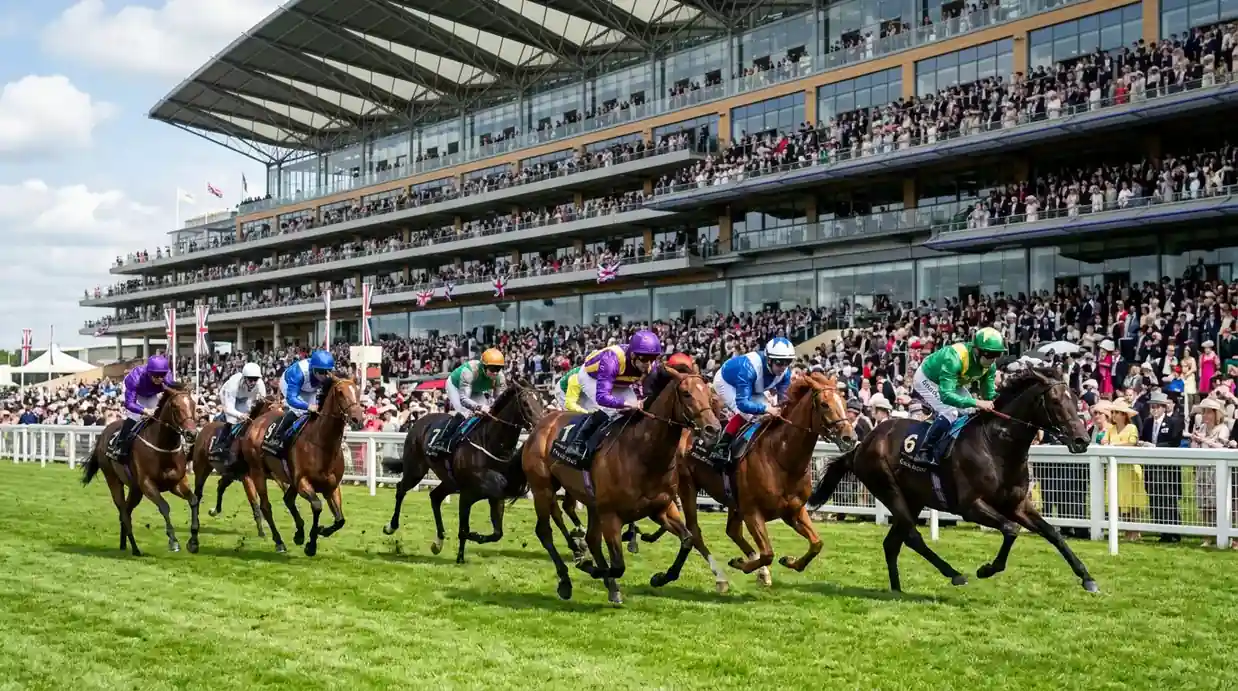
Cheltenham Festival 2018 taught me a lesson I still carry. I had backed a well-fancied hurdler whose form on good ground was electric — three wins from four, always travelling strongly. The forecast was dry all week. Then it rained overnight on Tuesday, the going changed from Good to Soft, and my selection laboured home in sixth, beaten twelve lengths. The horse was not suddenly useless. The ground had simply shifted the race’s dynamics in a direction that did not suit it.
Going — the official description of ground conditions — affects every horse in every race, but it does not affect them equally. Some horses have a low, daisy-cutting action that thrives on firm turf but struggles when the ground cuts up. Others have a high knee action that powers through heavy conditions but feels flat and one-paced on fast ground. UK racecourse attendance surpassed 5.031 million in 2025, and yet a significant portion of those racegoers will place a bet without checking the going report. That is free money left on the table for anyone who does.
Understanding going is not about memorising a scale. It is about grasping how ground conditions interact with a horse’s physiology, a race’s tempo, and a course’s drainage. Get that right, and you have one of the most reliable filters in form analysis.
The Official Going Scale: From Hard to Heavy
The British Horseracing Authority uses a scale that runs from the fastest surface to the most testing. On turf, the descriptions are: Hard, Firm, Good to Firm, Good, Good to Soft, Soft, and Heavy. On all-weather surfaces — polytrack, tapeta, or fibresand — the going is typically described as Standard, Standard to Slow, or Slow, though the variation is far less dramatic than on turf.
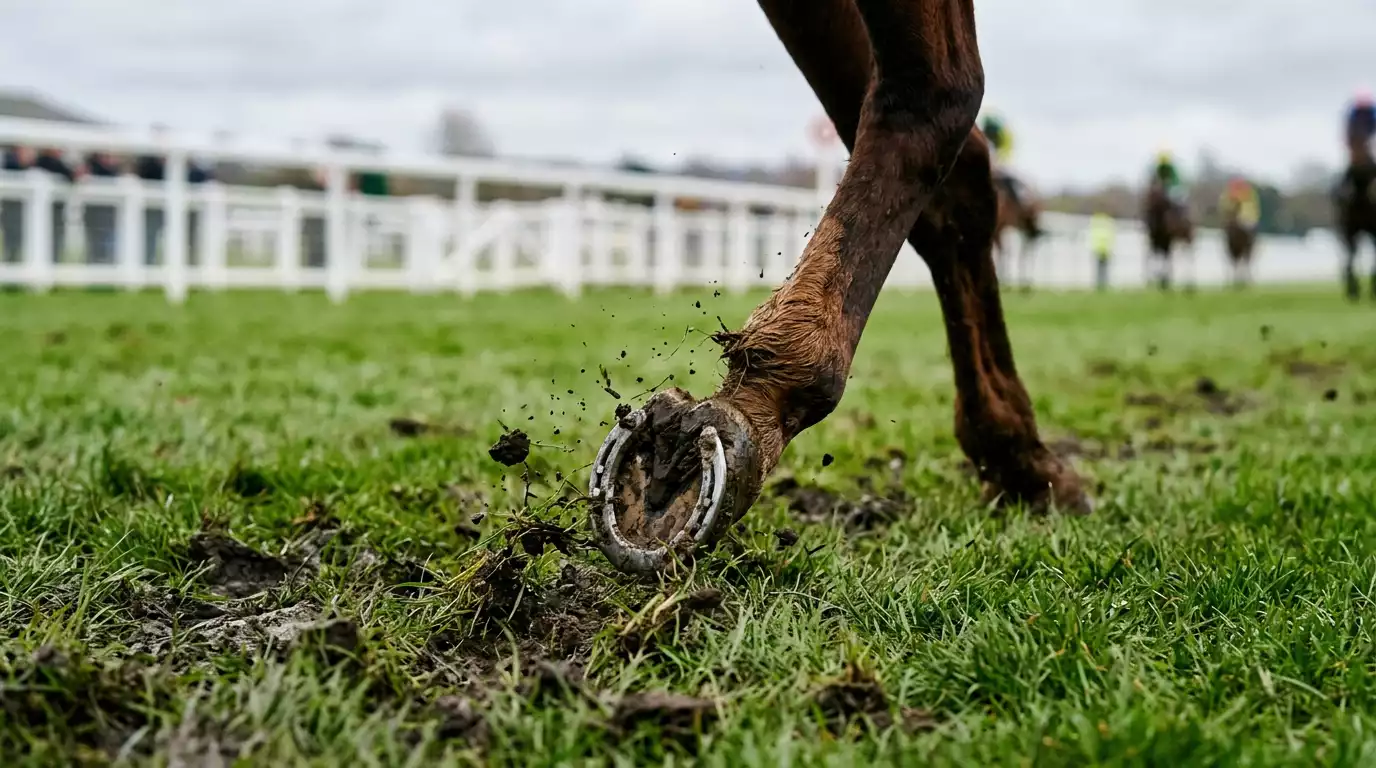
Each grade represents a meaningful difference in how the ground plays. Firm ground is dry, the turf is compact, and horses with a quick, efficient stride cover the surface fastest. It is the sprinter’s friend. Good ground is the middle territory — neither fast nor testing, and it suits the widest range of runners. Once you move to Good to Soft and below, the surface starts to demand more stamina. Horses need to pull their hooves out of the ground with every stride, which saps energy and favours those with strength and a staying temperament.
Heavy ground is a different sport entirely. Races on heavy going are slower by several seconds per mile, and the results can look nothing like what the form book predicted. Front-runners who blast off on good ground may exhaust themselves in the first half-mile when the going is heavy. Hold-up horses who rely on a turn of foot may find there is no foot to turn. The going is not just a footnote on the racecard — it rewrites the script.
One detail that catches out many punters: the going can change during a meeting. Rain between races will soften the ground, particularly on courses with poor drainage. Clerks of the course update the official going as conditions shift, and those updates can come mid-afternoon. If you placed a bet in the morning based on Good to Firm and the going has moved to Soft by post time, the race your horse is running in is not the same race you analysed.
The Going Stick and How Courses Measure Ground
Before 2007, going descriptions were largely subjective. The clerk of the course would walk the track, prod the ground with a boot or a walking stick, and make a judgement call. It worked, but it was inconsistent. Two different clerks at two different courses might describe identical conditions differently.
The going stick changed that. It is a device — roughly the size of a walking cane — fitted with sensors that measure the penetration and shear resistance of the turf. The clerk pushes it into the ground at multiple points around the course, and it produces a numerical reading. Those readings map to the official going descriptions: anything above 10 on the scale typically corresponds to Good to Firm or firmer, readings between 6 and 10 fall in the Good range, and below 6 you are into Soft or Heavy territory.
I find the raw going-stick readings more useful than the verbal descriptions because they offer granularity. “Good to Soft” covers a wide band, and there is a meaningful difference between Good to Soft with a reading of 6.8 and Good to Soft at 5.2. The lower number is significantly softer, and horses that struggle on genuinely testing ground may handle the higher end of the Good to Soft range perfectly well. Most racing websites publish going-stick readings alongside the official description. It takes ten seconds to check and it adds a layer of precision that the verbal description alone cannot provide.
How Going Shifts Odds and Outcomes
Richard Wayman, the BHA’s Director of Racing, noted that total betting turnover fell 9% in early 2025 compared to the same period the previous year — and while multiple factors drive that decline, the quality of the betting product matters. Going is a core part of that product. When the ground suits the right horses, races are competitive and the form reads true. When a snap change in conditions upends the form book, casual punters lose confidence and drift away.
For sharp bettors, though, going changes create opportunity. Here is why: the market prices horses based on their overall form profile, but it often underweights going preference. A horse whose last three runs were on Good ground might have run well each time. Dig deeper and you find its only victory came on Soft ground, and it was a convincing performance. If today’s race is on Soft ground, that horse’s chance is higher than its raw form figures suggest — but the market might not reflect it fully, because the algorithms and casual punters are weighting the three recent runs more heavily than the one relevant win.
I track going preferences in a simple table: horse name, run date, going, finishing position, distance beaten. After five or six runs, a pattern usually emerges. Some horses are versatile — they handle everything from Good to Firm down to Soft without a dip in performance. Others have a clear sweet spot, and their form outside that range is mediocre. The versatile ones are reliable but rarely offer big prices. The specialists are where value hides, because their price on the “wrong” going inflates their price on the “right” going — the market remembers the bad runs and forgets why they happened.
As the European Commission once observed, racing and betting in the UK share a unique interdependency stretching back over 200 years. Going conditions sit at the heart of that relationship, because they are one of the few variables that can transform a race’s outcome in ways the form book cannot fully predict. For punters willing to dig into the data, that unpredictability is not a problem. It is the edge. If you want to understand how these variables interact with how odds are formed and move, going preference is one of the strongest inputs.
Frequently Asked Questions
How do weather and going conditions affect horse racing results?
Weather directly changes the going — rain softens the ground, dry spells firm it up. Softer ground demands more stamina, slows race times, and favours horses with a high, powerful action. Firmer ground suits speedier, lighter-actioned horses. A shift in going between the morning and post time can alter the race dynamics significantly, so checking the latest going report before betting is essential.
Where do I check the going before a race?
The official going is published on the BHA website, racecourse websites, and all major racing portals including the Racing Post and At The Races. Going-stick readings, which give a more precise numerical value, are also published and are worth consulting for a finer-grained view of conditions. Updates can come as late as an hour before a race if conditions change.
Which horses perform best on soft ground?
Horses with a high knee action and a staying pedigree tend to handle soft and heavy ground best. Breeding is a useful indicator — certain sires are known for producing offspring that excel in testing conditions. Form is the most reliable guide, though: look at a horse’s finishing positions and margins specifically on Soft or Heavy going to see whether it thrives or struggles when the ground cuts up.
Published by the Horse bet Racing team.