
Horse Racing Accumulators: How Multi-Bets Work and When They Make Sense
 Available in US
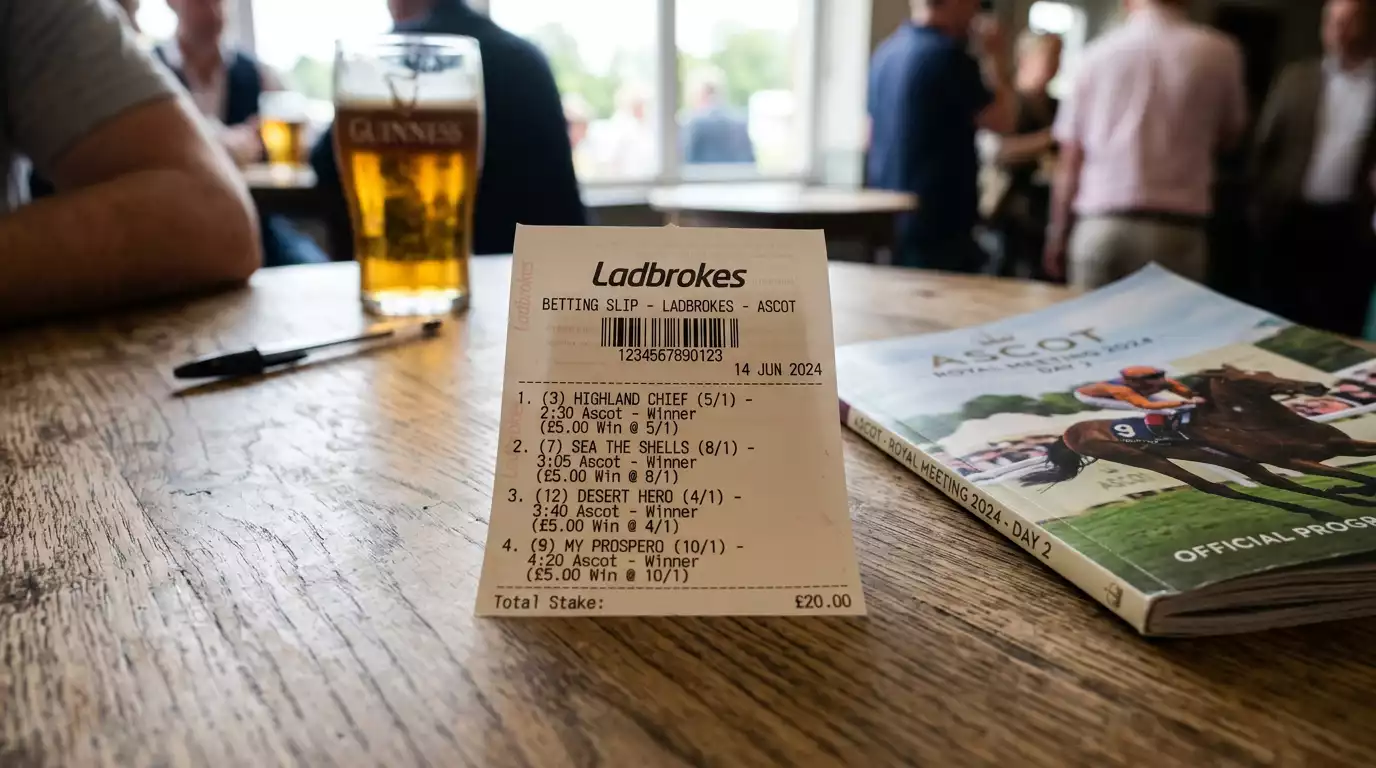
The Allure (and the Odds) of the Accumulator
I will be honest with you: the first horse racing bet I ever placed was a four-fold accumulator. I picked four horses from a Saturday card based on nothing more than names I liked and tips from a tabloid newspaper. The first three won. The fourth finished second by a neck. I have been chasing that feeling ever since — which is, of course, exactly how accumulators are designed to work.
An accumulator, or “acca,” is a single bet that links two or more selections. All selections must win for the bet to pay out, and the returns roll from one leg to the next, multiplying as they go. The appeal is obvious: small stakes can generate enormous payouts. A £2 four-fold at average odds of 4/1 per leg returns £1,250 if all four horses win. In a country where 48% of adults participate in some form of gambling over any four-week period, the accumulator is the gateway drug — a low-cost, high-excitement bet that keeps millions of punters engaged with racing every weekend.
But the mathematics behind accumulators are ruthless, and understanding them properly is the difference between treating accas as entertainment (which is fine) and treating them as a strategy (which is dangerous).
How an Accumulator Payout Is Calculated
The mechanics are straightforward. Your stake goes onto the first selection. If it wins, the entire return — stake plus profit — rolls onto the second selection. If that wins, the return rolls again onto the third, and so on. The final payout is your original stake multiplied by the combined decimal odds of all legs.
Take a three-horse accumulator at 3/1, 2/1, and 5/1. In decimal odds, those are 4.0, 3.0, and 6.0. Multiply them: 4.0 x 3.0 x 6.0 = 72.0. A £5 stake returns £360 if all three win. That compound growth is what makes accumulators exciting. It is also what makes them mathematically punishing.
Each additional leg multiplies not just the potential return but also the bookmaker’s built-in margin. If the overround on a single race is 115% — meaning the bookmaker has a roughly 15% edge baked into the prices — a four-fold acca compounds that edge four times. The effective overround on a four-fold at 115% per leg is 1.15 to the power of 4, which is 1.749. That is a 74.9% overround across the bet, meaning the bookmaker’s theoretical margin on your acca is substantially larger than on any single bet.
Lucky 15, Yankee, and Other Multi-Bet Structures
Straight accumulators are all-or-nothing: one loser and the entire bet is dead. That is why the betting industry developed permutation bets — structures that cover multiple combinations and pay out even if not every selection wins.
A Yankee covers four selections in eleven bets: six doubles, four trebles, and one four-fold. No singles. If two of your four horses win, you collect on one double. If three win, you collect on three doubles and one treble. You need at least two winners to see a return, but the bet costs eleven times your unit stake. A £1 Yankee costs £11. The trade-off is coverage versus cost.
A Lucky 15 adds four singles to the Yankee structure, giving you fifteen bets in total. A £1 Lucky 15 costs £15, but you get a return from just one winner. Many bookmakers offer bonuses on Lucky 15s — typically double odds for one winner and a percentage bonus if all four win. These bonuses can shift the value significantly, because the extra payout on a single winner partially compensates for the higher outlay. Total online GGY sits at £2.6 billion across all remote betting, with horse racing’s £766.7 million share being second only to football — and multi-bet structures like the Lucky 15 contribute a disproportionate chunk of bookmaker revenue because of their higher built-in margin.
A Patent covers three selections in seven bets: three singles, three doubles, and one treble. It is a smaller, cheaper version of the Lucky 15 concept. A Heinz covers six selections in fifty-seven bets, which gets expensive fast but offers massive coverage. The choice of structure depends on how many selections you have, how confident you are, and how much you want to spend. I lean toward Lucky 15s when I have four strong fancies, because the single-bet coverage acts as insurance, and the bookmaker bonuses add a layer of value that straight accumulators lack.
Do Accumulators Offer Value? A Probability Check
Here is the uncomfortable truth: for most punters, most of the time, accumulators do not offer positive expected value. The compound overround ensures that the bookmaker’s edge grows with every leg you add. A five-fold at even modest odds carries an effective margin that would horrify anyone who saw it laid out in percentage terms.
But that does not mean accumulators are always bad bets. There are specific circumstances where the structure makes sense. First, if you are using a bookmaker that offers acca insurance — refunding your stake as a free bet if one leg lets you down — the safety net changes the equation. The insurance does not eliminate the overround, but it softens the impact of the most likely losing scenario (one leg failing).
Second, if you are combining selections where you have identified genuine value in each individual leg, the compounding works in your favour rather than against you. A four-fold where every leg is a value bet — odds longer than the true probability — can carry a positive expected value even after the overround is factored in. The problem is that this requires every leg to be a value bet, and most punters overestimate their edge on at least one selection.
Third, if you treat accumulators as entertainment with a fixed, affordable stake — a £2 or £5 flutter on a Saturday — the expected loss is small and the entertainment value is real. The difficulty arises when recreational punters start chasing losses with bigger acca stakes, or when they believe that a system of accumulator betting can generate consistent profit. It cannot, unless the individual selections carry value. The acca structure amplifies whatever edge you have — positive or negative. For a clearer look at the fundamentals of horse racing betting in the UK, start with the single-bet principles before layering on complexity.
Frequently Asked Questions
What is a Yankee bet in horse racing?
A Yankee is a multi-bet covering four selections in eleven separate bets: six doubles, four trebles, and one four-fold accumulator. There are no singles, so you need at least two of your four selections to win before you see a return. A £1 Yankee costs £11, and the total payout depends on how many selections win and at what odds.
How is a Lucky 15 different from an accumulator?
A straight accumulator links all selections into one bet — every leg must win. A Lucky 15 covers four selections in fifteen separate bets: four singles, six doubles, four trebles, and one four-fold. You get a return from just one winner, though you need multiple winners for a meaningful profit because the total outlay is fifteen times your unit stake. Many bookmakers offer bonuses on Lucky 15s that add extra value.
Can I place an each-way accumulator?
Yes. An each-way accumulator doubles your stake because each leg is effectively two bets — one to win and one to place. If a horse in your acca places but does not win, the place part carries forward at the reduced place odds while the win part is lost. Each-way accas are popular in big-field handicap races where the place terms are generous and the chances of multiple place finishes are higher.
Published by the Horse bet Racing team.