Each-Way Bet Calculator: How to Work Out Your Horse Racing Returns
 Available in US
Knowing Your Returns Before You Bet Beats Hoping After
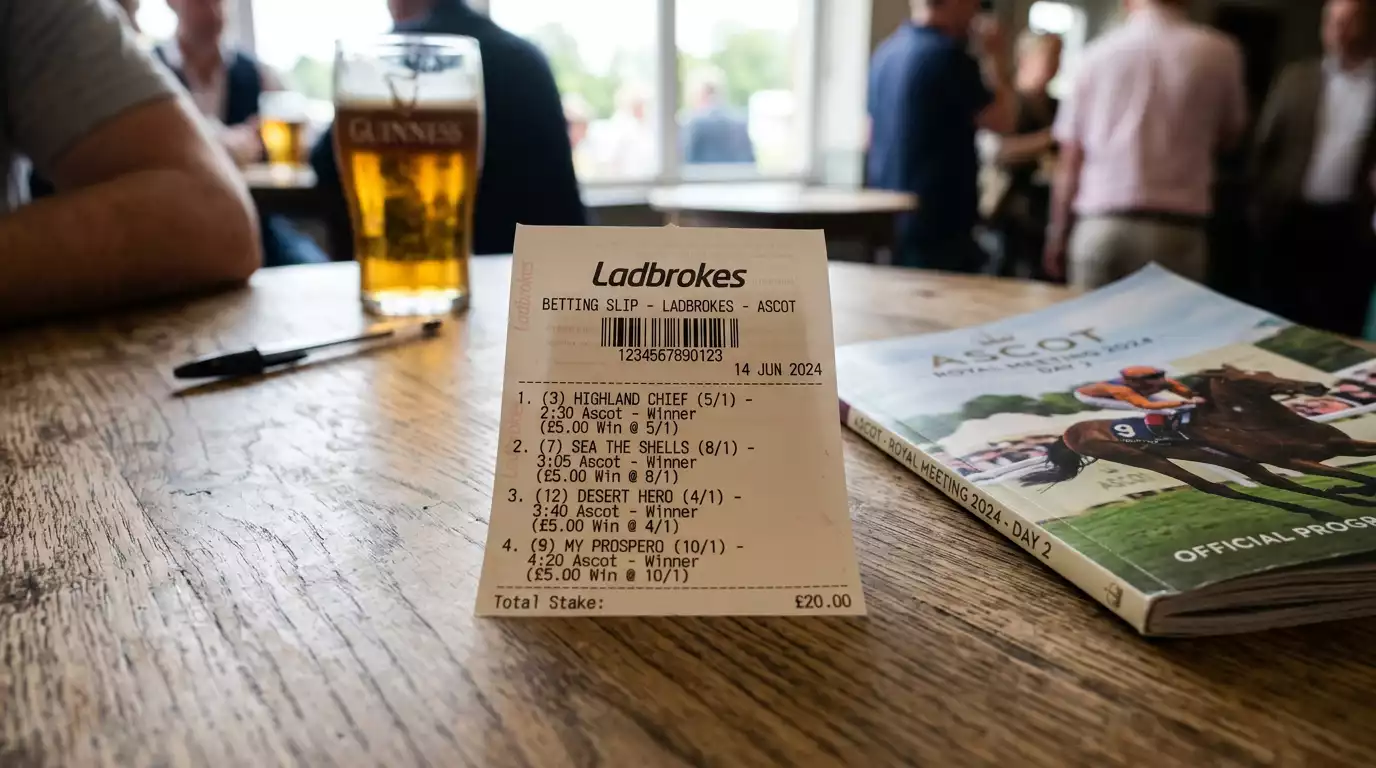
I placed each-way bets for three years before I properly understood how the payout was calculated. I knew the rough principle — you get something back if your horse places — but the precise mechanics were a blur. I would check my balance after a race, see a number, and assume the bookmaker got it right. It was not until I sat down with a calculator and worked through the formula that I realised I had been leaving money on the table by not understanding what I was entitled to.
Horse racing participation in the UK swings between 4% and 7% of adults depending on the season, and each-way betting is one of the most popular bet types across that entire audience. The Grand National alone sees roughly £250 million in wagers, a significant portion of which are each-way bets on the big field. Yet most punters placing those bets could not tell you exactly what they would receive if their horse placed second, third, or fourth. This guide changes that. Once you know the formula, you will never place an each-way bet without knowing exactly what you stand to collect.
The Each-Way Formula: Win Part + Place Part
An each-way bet is two separate bets rolled into one: a win bet and a place bet. Your total stake is doubled because you are placing two bets. A £5 each-way bet costs £10 — £5 on the horse to win and £5 on the horse to place.
The win part is straightforward: if the horse wins, you collect at the full odds. A £5 win bet at 10/1 returns £55 (£50 profit plus your £5 stake).
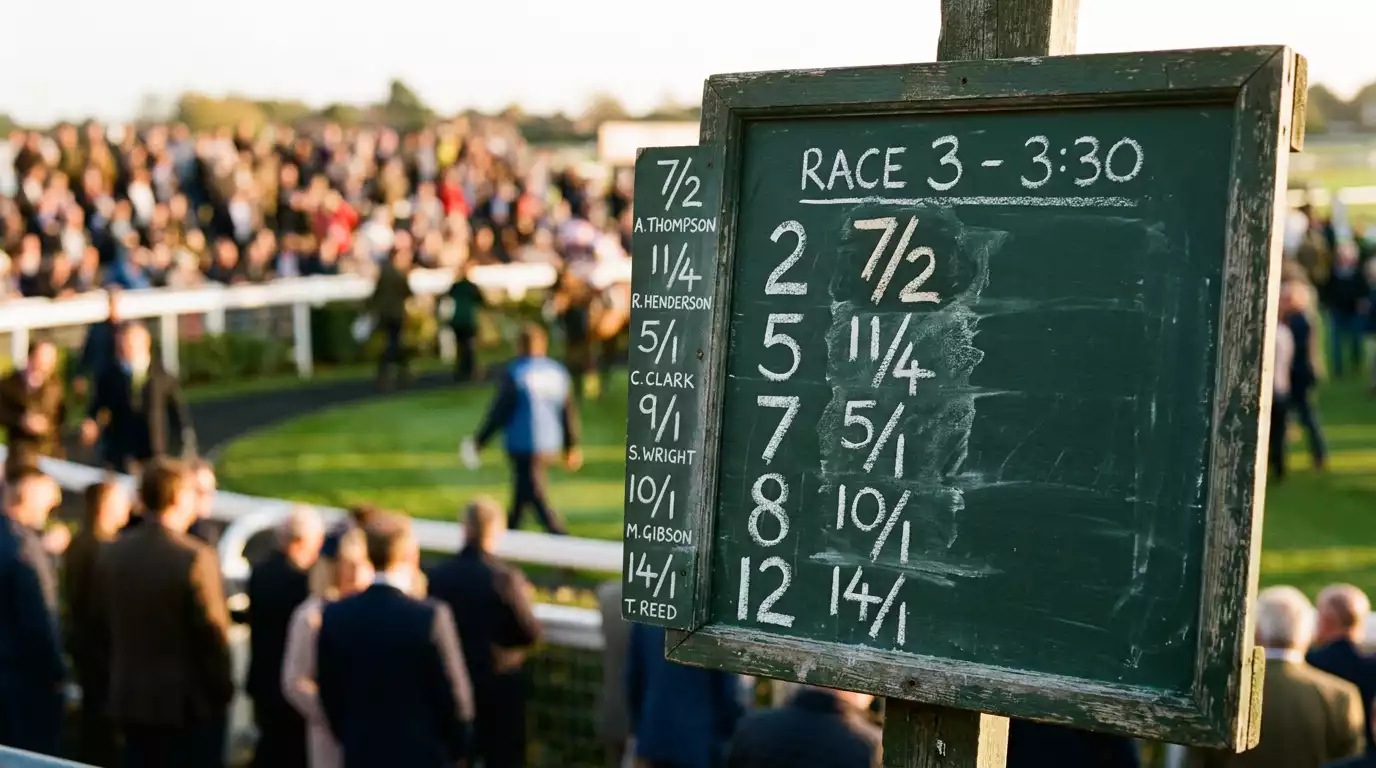
The place part is where the calculation gets specific. The place odds are a fraction of the win odds, determined by the “place terms” the bookmaker offers. The two standard place terms in UK horse racing are 1/4 odds and 1/5 odds. The fraction depends on the race type and field size.
At 1/4 odds places (the most common for handicaps with eight or more runners), the place odds on a 10/1 shot are 10/4, which simplifies to 5/2. Your £5 place bet at 5/2 returns £17.50 (£12.50 profit plus your £5 stake).
At 1/5 odds places (used in non-handicap races with eight or more runners), the place odds on a 10/1 shot are 10/5, which simplifies to 2/1. Your £5 place bet at 2/1 returns £15 (£10 profit plus your £5 stake).
If the horse wins, you collect both the win part and the place part. At 10/1 with 1/4 place terms, a £5 each-way winner returns £55 (win) plus £17.50 (place) = £72.50 total from a £10 outlay. If the horse places but does not win, you collect only the place part: £17.50 from a £10 outlay, giving you a net profit of £7.50.
The number of places paid depends on field size. In races with five to seven runners, two places are paid. In races with eight or more, three places are paid. In handicaps with sixteen or more runners, four places are typically paid. Some bookmakers offer extra places on selected races as a promotion, adding a fifth or sixth place — a valuable enhancement that increases the probability of a return.
Worked Examples: 1/4 Odds and 1/5 Odds Races
Let me walk through two complete scenarios so the formula becomes second nature.
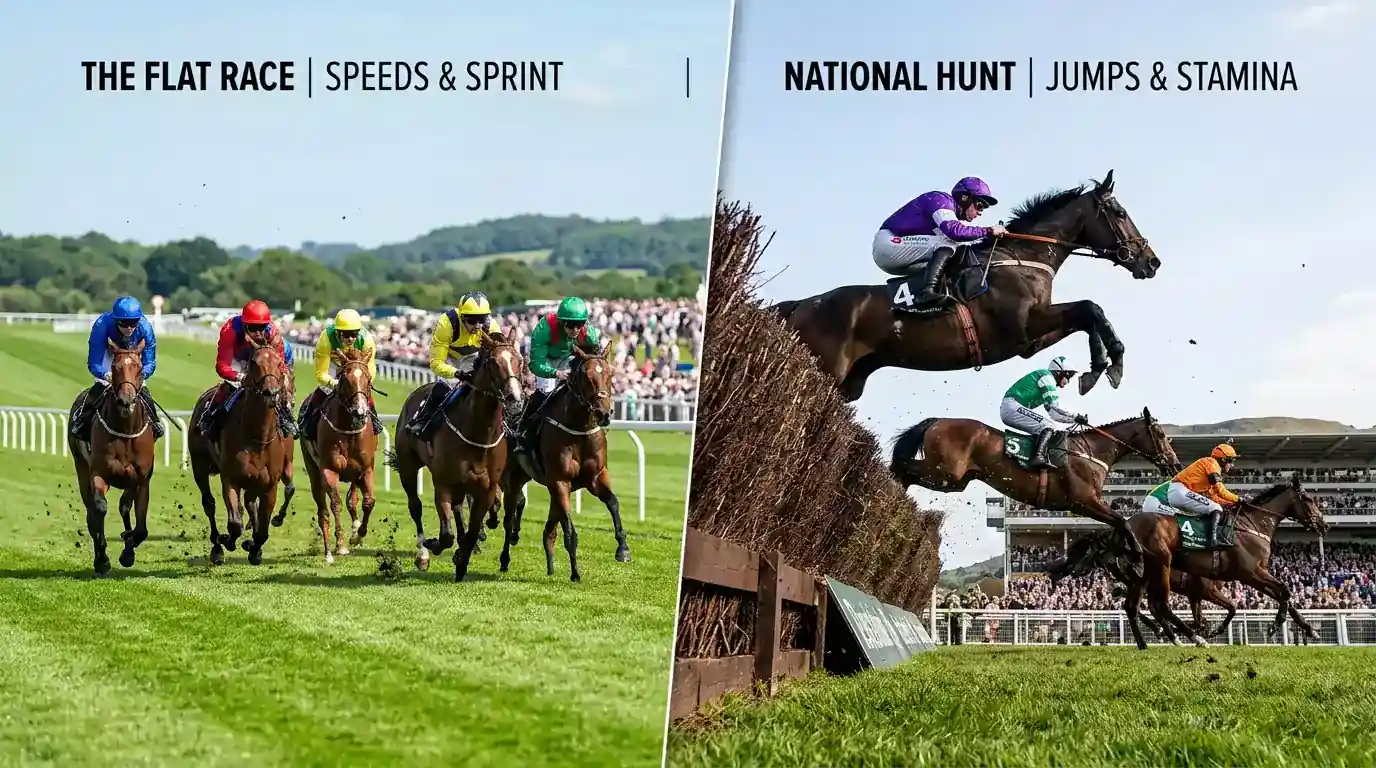
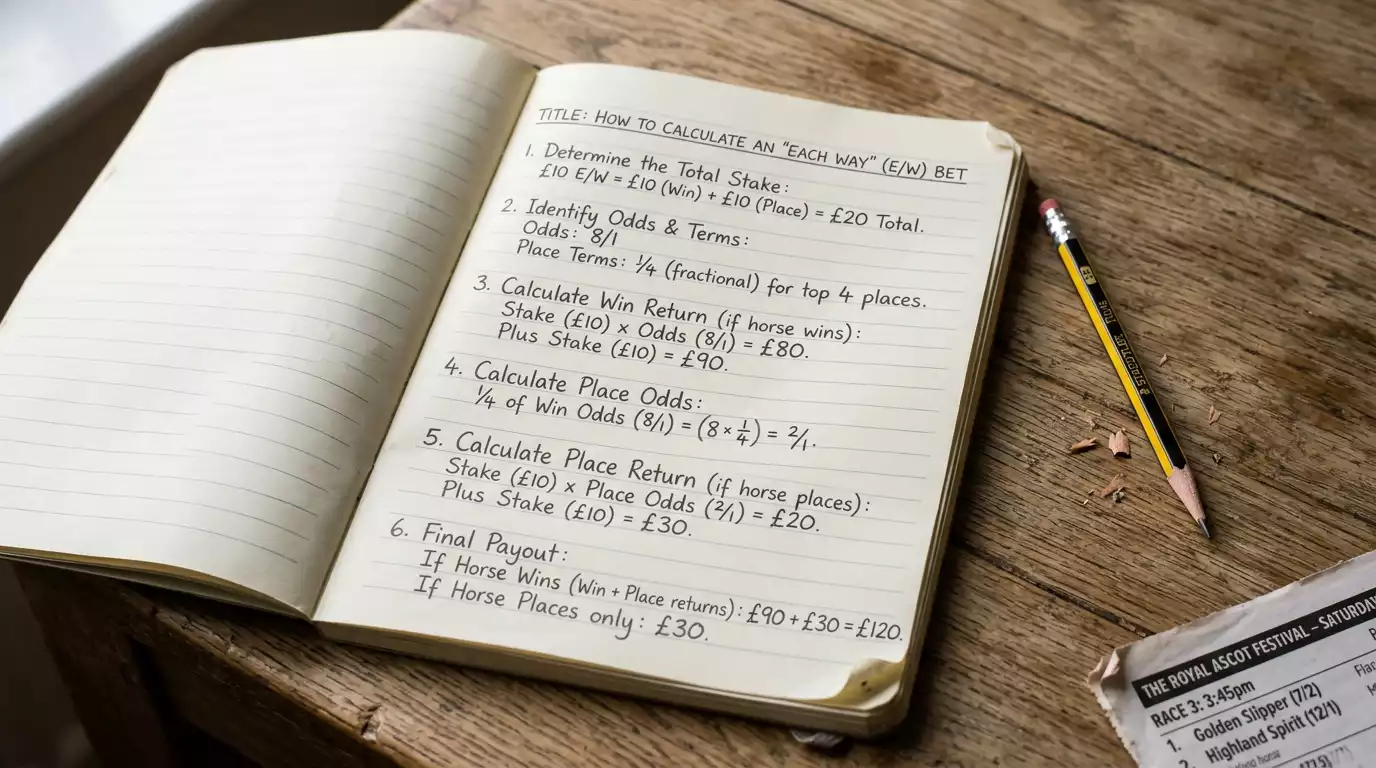
Example one: a £10 each-way bet (total outlay £20) on a horse at 8/1 in a 20-runner handicap at the Grand National meeting. Place terms are 1/4 odds, four places paid. The Grand National generates roughly £250 million in total meeting wagers, and the vast majority of each-way bets placed on the big race follow exactly this structure.
If the horse wins: win part returns £10 x 8/1 = £80 profit + £10 stake = £90. Place part returns £10 x 2/1 (8 divided by 4) = £20 profit + £10 stake = £30. Total return: £120 from a £20 outlay. Net profit: £100.
If the horse finishes second, third, or fourth: win part loses (£10 gone). Place part returns £30 (as above). Total return: £30 from a £20 outlay. Net profit: £10.
If the horse finishes fifth or worse: both parts lose. Total loss: £20.
Example two: a £10 each-way bet (total outlay £20) on a horse at 6/1 in a 10-runner Group 1 race. Place terms are 1/5 odds, three places paid.
If the horse wins: win part returns £10 x 6/1 = £60 profit + £10 stake = £70. Place part returns £10 x 6/5 = £12 profit + £10 stake = £22. Total return: £92 from a £20 outlay. Net profit: £72.
If the horse finishes second or third: win part loses. Place part returns £22. Total return: £22 from £20 outlay. Net profit: £2. That slim profit margin on a place-only result at moderate odds is exactly why each-way betting on short-priced horses in small fields often does not make mathematical sense. The place return barely covers the total stake.
If the horse finishes fourth or worse: both parts lose. Total loss: £20.
Quick Mental Shortcuts for Estimating Returns at the Track
You will not always have a calculator to hand — especially at the racecourse, where decisions happen quickly and the excitement does not wait for arithmetic. Here are the mental shortcuts I use.
For 1/4 odds places: divide the win odds by 4 to get the place odds. A 12/1 shot has place odds of 3/1. A 20/1 shot has place odds of 5/1. Quick enough to do in your head while the horses are loading into the stalls.
For 1/5 odds places: divide the win odds by 5. A 10/1 shot has place odds of 2/1. A 15/1 shot has place odds of 3/1. Simpler still.
To estimate total each-way returns on a winner: add the win return and the place return. For a rough figure, take the win odds, add the place odds, and multiply by your unit stake. At 10/1 with 1/4 places, that is 10 + 2.5 = 12.5 times your unit stake, plus both stakes back. Close enough for a quick decision.
The shortcut that matters most: know the break-even point. An each-way bet costs double the unit stake, so you need the place return to exceed the total outlay for a place-only result to be profitable. At 1/4 odds, the break-even win odds for a place-only profit are roughly 4/1 — anything shorter and a place-only finish loses money relative to the total outlay. At 1/5 odds, the break-even is roughly 5/1. If you are backing a horse at 3/1 each-way, the maths is working against you on the place part unless the horse actually wins.
Understanding these numbers is what turns each-way betting from a hopeful punt into a calculated decision. The formula is the same whether the race is a maiden at Catterick or the Gold Cup at Cheltenham. Learn it once and you will never place an each-way bet blind again. For a deeper look at the strategic side of this bet type, the each-way betting guide covers the scenarios where each-way outperforms a straight win bet — and where it does not.
Frequently Asked Questions
How do I calculate each-way returns manually?
Split your each-way bet into two parts: a win bet and a place bet, each at your unit stake. Calculate the win return at the full odds. Calculate the place return at the place fraction (1/4 or 1/5 of the win odds). If the horse wins, add both returns together. If the horse places but does not win, you collect only the place return. If the horse finishes outside the places, both bets lose. Your total outlay is always double your unit stake.
Do all bookmakers use the same place terms for each-way bets?
The standard place terms are consistent across most UK bookmakers for standard races: 1/5 odds in non-handicap races with eight or more runners, and 1/4 odds in handicap races. However, bookmakers can offer enhanced place terms as a promotion — extra places or improved fractions. The number of places paid (two, three, or four) also follows a standard scale based on field size, though bookmakers occasionally add extra places on selected races.
Prepared by the Horse bet Racing editorial staff.