Best Odds Guaranteed in Horse Racing: How BOG Protects Your Returns
 Available in US
BOG Strips Away One of Betting’s Biggest Frustrations
Picture this: you spot a horse you fancy in the 3:15 at Kempton. The early price is 8/1, so you take it. By post time, the market has shifted and the Starting Price is 12/1. Without BOG, you are paid at 8/1 — the price you locked in. That four-point gap between what you accepted and what the market ultimately settled on is money you left behind. Over a season of betting, those gaps add up to a meaningful chunk of profit that simply evaporates.
Best Odds Guaranteed, commonly shortened to BOG, exists to eliminate that frustration. It is a bookmaker policy that promises to pay you at whichever price is higher — the one you took when you placed the bet or the Starting Price at the off. Gross gambling yield from remote horse racing betting reached £766.7 million in the year ending March 2025, and a significant portion of that revenue is shaped by the pricing mechanics that BOG addresses. For punters, BOG is one of the few structural advantages that the industry freely offers. Understanding how it works — and where it does not — makes a tangible difference to your returns.
The Mechanics: Early Price, SP, and the Guarantee
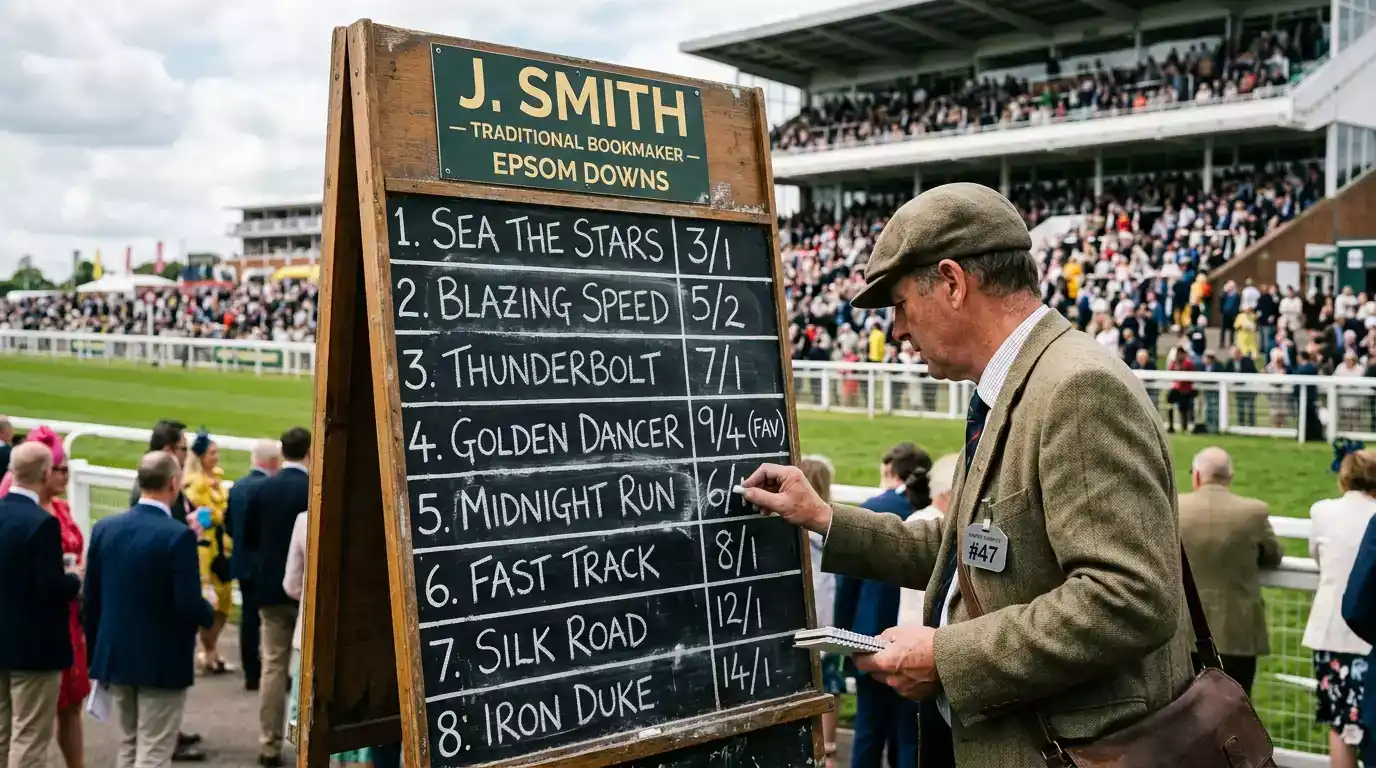
I started taking early prices seriously about six years ago, after noticing that horses I backed at morning prices frequently drifted by post time. It felt like bad luck, but it was actually market mechanics working as designed. Early prices are the bookmaker’s opening assessment of each runner’s chance, published anything from the morning of the race to days in advance for bigger events. These prices shift as money comes in and the market adjusts.
The Starting Price is the official odds at the moment the race begins, determined by on-course bookmakers through a standardised process. It reflects the final weight of money. Sometimes the SP is shorter than the early price — the horse has been “backed in” — and sometimes it is longer, meaning the horse has “drifted.”
BOG bridges the gap between these two moments. If you take an early price and the SP ends up longer, the bookmaker pays you at the SP. If the SP is shorter, you keep your original price. Either way, you get the better deal. It sounds almost too generous, and in a sense it is — the bookmaker absorbs the cost as a customer retention tool, knowing that the incremental payouts are offset by the volume of bets placed at early prices that end up shorter than the SP.
The practical workflow is straightforward. You identify your selection, check the early price, and place your bet. You do not need to opt in or click an extra button on most platforms — BOG is applied automatically. After the race, the bookmaker compares your price with the SP and settles at the higher figure. Where I have seen punters trip up is when they assume BOG applies to every bet type and every market. It often does not, and the restrictions are worth knowing.
How BOG Affects Real-World Returns: A Worked Scenario
Numbers tell this story better than theory. Say you back five horses over a Saturday card, each at a £10 stake. Here is a plausible set of outcomes:
Horse A: you take 6/1, SP drifts to 9/1, the horse wins. Without BOG, you collect £70 (£60 profit plus your £10 stake). With BOG, you collect £100 (£90 profit plus stake). That is an extra £30 from a single bet.
Horse B: you take 4/1, SP shortens to 3/1, the horse wins. BOG is irrelevant here — you already have the better price at 4/1, so you collect £50 either way.
The other three horses lose, so BOG has no effect on them. Across those five bets, BOG added £30 to your return from a total outlay of £50. That is a 60% uplift on your winning bet’s profit, generated by a policy that cost you nothing extra.
Over a full season, the cumulative effect depends on how often you take early prices that end up shorter than the SP. In my own records, roughly 35% to 40% of my winning bets see the SP longer than my early price. The average improvement on those bets is between one and two points of odds. Across hundreds of bets, that adds up to a few hundred pounds a year — not life-changing, but meaningful for a recreational bettor and significant for anyone treating this as a serious analytical exercise. Total online GGY across all remote betting sits at £2.6 billion, with horse racing second only to football — so bookmakers have the margin to absorb these payouts while still running profitable racing books.
Restrictions and Fine Print to Watch For
Not every bet qualifies for BOG, and this is where I see punters make avoidable errors. The most common restrictions are:
Ante-post bets are almost always excluded. If you back a horse for the Grand National in January, the BOG guarantee will not apply because there is no meaningful SP comparison months before the race. BOG is designed for day-of-race betting.
Some bookmakers limit BOG to UK and Irish races only. International racing, including French or American fixtures shown on UK broadcasts, typically does not qualify. Always check before assuming your bet is covered.
Maximum payout caps can apply. A bookmaker might guarantee BOG but cap the additional payout at a certain amount — say, the equivalent of 100/1. If you took 20/1 and the SP is 150/1 on a shock result, the bookmaker may pay at 100/1 rather than the full SP.
Enhanced odds promotions and price boosts sometimes override BOG. If you take a “boosted” price of 10/1 on a horse that would otherwise be 7/1, the BOG guarantee might not apply because the boosted price is already above the expected SP.
Free bets and bonus-funded stakes may be excluded from BOG in some operators’ terms. If you are using a promotional stake, read the specific conditions before assuming the guarantee applies.
My approach is simple: I use BOG-eligible bookmakers as my primary accounts for horse racing, and I always take the early price when I have done my form study and identified value. The guarantee removes downside risk without adding any cost. For anyone serious about understanding how horse racing odds work, BOG is one of the few mechanisms that structurally benefits the punter rather than the bookmaker.
Frequently Asked Questions
Does Best Odds Guaranteed apply to ante-post bets?
No. BOG applies to day-of-race bets placed at an early price before the race starts. Ante-post bets, placed days, weeks, or months in advance, are excluded because the Starting Price comparison that BOG relies on does not apply until race day. If you want BOG protection, place your bet on the day of the race once early prices are available.
Is BOG available on all UK horse races?
Most major UK-licensed bookmakers offer BOG on all UK and Irish horse racing. However, some exclude certain race types, such as tote-only races or international fixtures broadcast in the UK. Restrictions also vary by operator — some cap the maximum additional payout or exclude bets placed with free-bet tokens. Check your bookmaker’s specific BOG terms before relying on the guarantee.
Created by the ”Horse bet Racing” editorial team.