Royal Ascot Betting Guide: How to Approach Flat Racing’s Biggest Stage
 Available in US
Ascot Runs on Speed, Class, and Draw
The first time I went to Royal Ascot, I made the mistake of ignoring the draw completely. I backed a well-fancied sprinter in the King’s Stand Stakes that had blistering form — but was drawn on the far side in a year when the stands’ rail proved the faster ground. The horse ran a perfectly fine race on the wrong part of the track and finished fifth. That afternoon taught me something that years of form study alone never quite hammered home: at Ascot, the track itself is a variable you cannot afford to ignore.
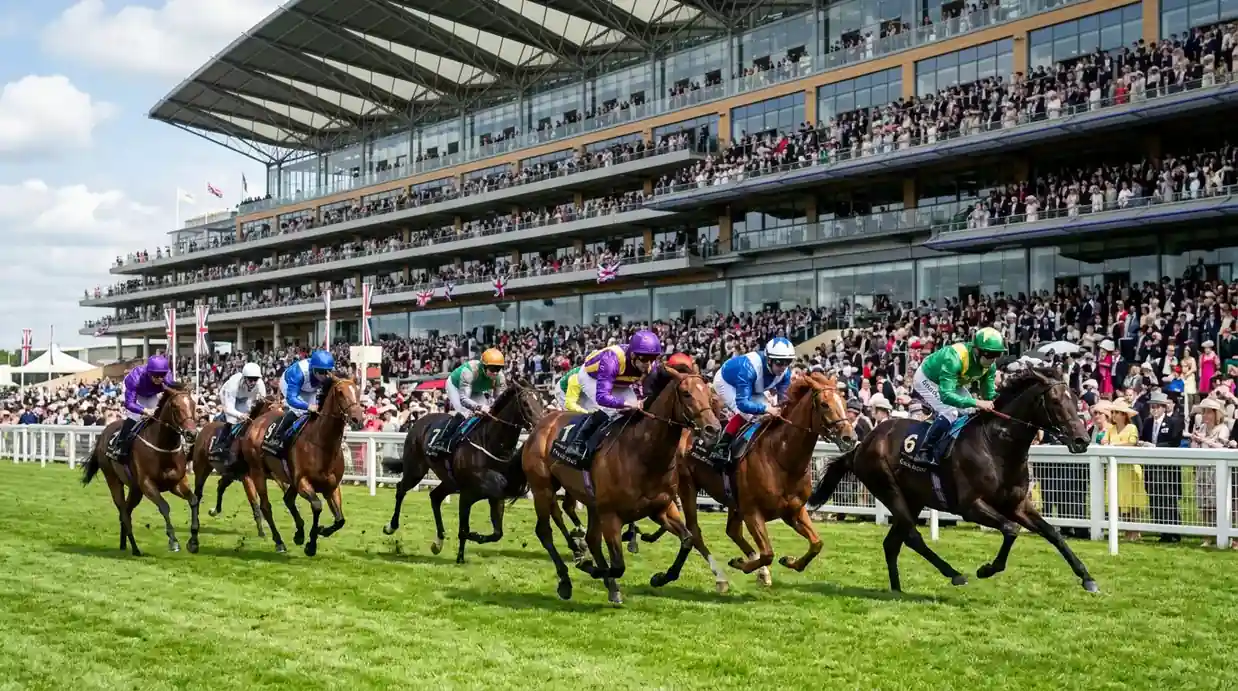
Royal Ascot is a five-day festival held each June, and it brings together the best flat racehorses from Britain, Ireland, France, Australia, Hong Kong, and Japan. Racecourse attendance across UK racing passed 5.031 million in 2025, and Royal Ascot alone contributes a significant portion of that figure. The meeting features races at every distance from five furlongs to two and a half miles, across class levels from handicaps to Group 1 championship contests. That range makes it the most diverse flat meeting on the calendar — and the most analytically demanding for bettors.
Group-Race Hierarchy and What It Means for Odds
Flat racing in Britain is structured in a class hierarchy that directly affects how odds are set. At the top sit Group 1 races — the championship events with the biggest prize funds, the highest-rated fields, and the shortest prices on the market leaders. Royal Ascot hosts eight Group 1 races across the five days, more than any other flat meeting in Britain.
Below Group 1 are Group 2 and Group 3, which carry slightly lower prize money and attract slightly weaker fields. Then come Listed races, Class 1 handicaps, and so on down the ladder. The distinction matters for betting because the market efficiency increases with race class. In a Group 1 at Ascot, the market is sharp: professional punters, syndicates, and algorithms have all priced the field, and the odds are tight. Finding value in the Gold Cup or the Queen Anne Stakes is hard work.
In the handicaps, the picture is different. Ascot’s Heritage Handicaps — the Wokingham Stakes over six furlongs, the Royal Hunt Cup over a mile, the Ascot Stakes over two and a half miles — attract huge fields and wide-open betting markets. A 30-runner Wokingham offers each-way terms of a quarter the odds for the first six places, and the range of possible outcomes is vast. These races are where Ascot gives back to the punter. The form is harder to assess, the market is less efficient, and the draw plays an outsized role. If you are looking for your best betting opportunities at the Royal Meeting, the Heritage Handicaps are where I spend most of my analytical time.
Draw Bias at Ascot: Track Data by Distance
Ascot’s track is right-handed, roughly triangular, with a straight mile course and a round course that starts from a chute. The straight course — used for races at five, six, and seven furlongs, and the one-mile races — is where draw bias matters most. The European Commission once observed that racing and betting in the UK share an interdependency stretching back over two centuries, and that relationship is perhaps most visible at meetings like Ascot, where the track’s physical geometry directly shapes betting value.
On the straight course, the ground conditions determine which side of the track rides faster. In recent years, the stands’ side (high draws) has often been favoured when the ground is on the quicker side of Good. The far side (low draws) can come into play on softer ground, when the unraced strip along the far rail offers fresher turf. But there is no fixed rule — the bias shifts depending on how the ground staff have watered the course, where the rain has fallen, and the camber of the track on a given day.
What I do before every straight-course race at Royal Ascot is check the results from earlier in the meeting. If the first two days show a clear stands’-side bias in the sprint races, that pattern is likely to continue for the rest of the week unless conditions change. Horses drawn on the unfavoured side face a genuine disadvantage, often equivalent to two or three lengths, and the market does not always price that gap accurately. Average turnover per race on Premier Fixtures rose by 1.1% in 2025 while Core Fixtures fell, and Ascot is a Premier Fixture — meaning the pools are deep, the market is liquid, and even small edges translate into real money.
On the round course, used for races at a mile and a quarter and beyond, draw bias is less pronounced but still relevant. Low draws can have an advantage because the horses break from the inside and face a shorter run to the first bend. In large fields, a wide draw means covering extra ground early, which costs energy and position.
Trainer and Jockey Patterns at the Royal Meeting
Certain trainers and jockeys have records at Royal Ascot that deviate significantly from their national averages. The meeting’s prestige attracts the best, but within that elite pool, specific patterns recur.
Aidan O’Brien’s Ballydoyle operation has dominated Royal Ascot for two decades, but his strike rate varies by race type. He is strongest in the middle-distance Group 1s — the Prince of Wales’s Stakes, the King Edward VII Stakes — and relatively weaker in the big handicaps. His runners in those championship events are often sent off as favourites and rarely offer value, but when he runs a lesser-fancied second or third string in a Group race, that horse can represent a better bet than the stable’s number one.
Among jockeys, track familiarity matters enormously. Riders who have spent years navigating Ascot’s undulating track, its tricky camber on the round course, and the challenge of judging pace over the straight mile have a measurable edge over international visitors riding the course for the first time. I track jockey records at Ascot specifically — not their overall season statistics — and use that as a tiebreaker when two horses are otherwise closely matched.
Another angle that produces results: first-season sires in the two-year-old races. Royal Ascot’s juvenile contests (the Coventry Stakes, the Albany Stakes, the Norfolk Stakes) are run before the market has full data on how first-crop sires perform on the British turf. French and Irish trainers sometimes arrive with unexposed two-year-olds by unfashionable sires, and the prices can be generous. Not every one delivers, but the asymmetry between risk and reward is attractive. For a wider perspective on how major festival betting differs from everyday racing, the same principle applies: big meetings compress information gaps into short windows, and the punter who spots them first is rewarded.
Frequently Asked Questions
Why does Royal Ascot only feature flat racing?
Royal Ascot is a flat racing festival because Ascot Racecourse runs its flat programme during the summer months when the turf conditions suit flat racing. National Hunt racing at Ascot takes place in the winter — meetings like the Clarence House Chase and the Ascot Chase are jumps fixtures held on the same course. The Royal Meeting in June is exclusively flat by tradition and calendar.
Does draw position matter at Royal Ascot?
Yes, particularly on the straight course used for sprint and mile races. The advantage shifts between the stands’ side and the far side depending on ground conditions, watering patterns, and weather. Checking the results from earlier in the meeting is the best guide to the prevailing bias. On the round course, low draws (inside positions) have a slight advantage in large fields because they cover less ground to the first bend.
Written by the editors at Horse bet Racing.