Tote Betting Explained: How Pool Betting Works in UK Horse Racing
 Available in US
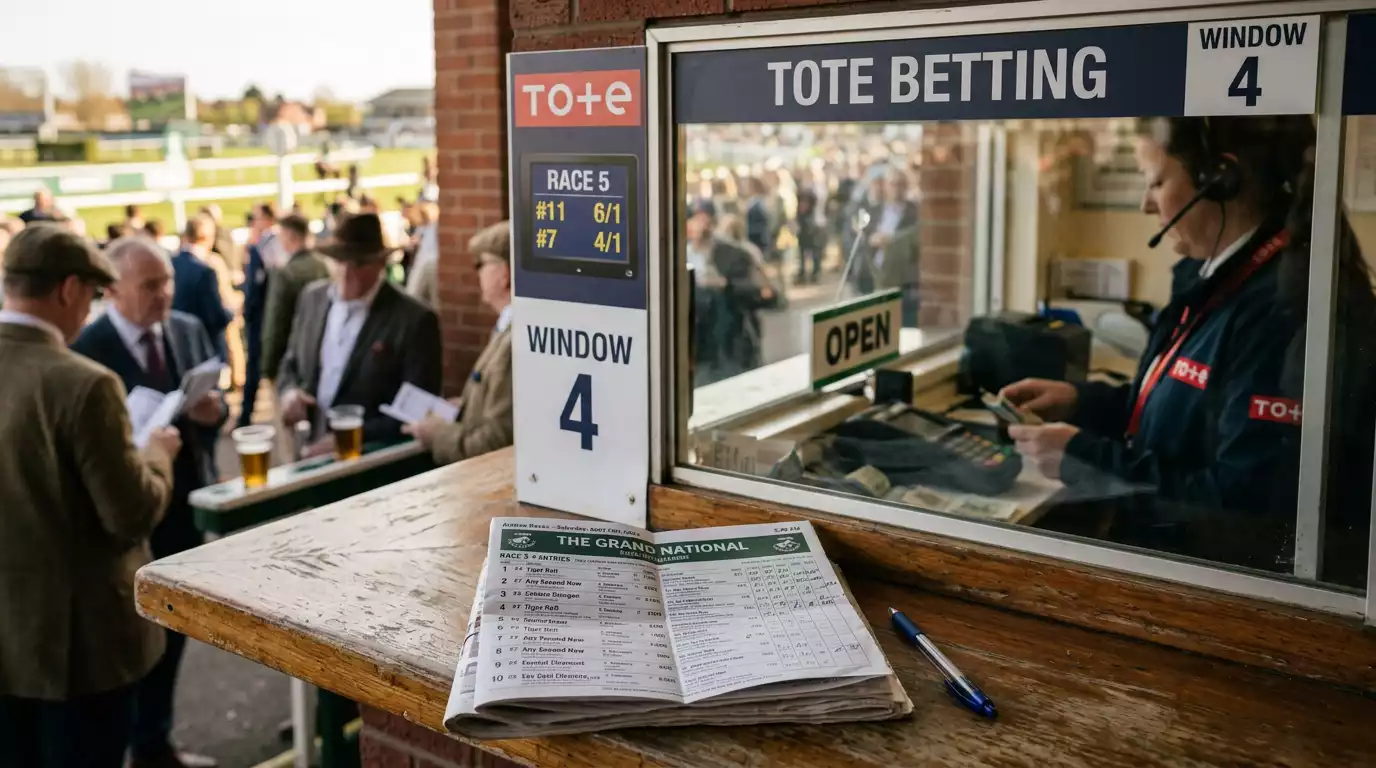
The Tote Runs on a Different Engine
Most punters in the UK bet against a bookmaker. You take a price, the bookmaker takes the opposite side, and if you win, they pay out from their own margin. The Tote works on an entirely different principle — and the first time I properly understood that difference, it changed how I approached certain races.
The Tote is a pool betting system, known internationally as pari-mutuel. Instead of betting against a bookmaker, you are betting into a collective pot alongside every other punter who has backed a horse in that race. The total pool is divided among the winners after a deduction for operating costs. The Levy yield from horse racing betting hit £108.9 million in 2024/25, a figure that includes contributions from both fixed-odds and pool betting — and the Tote’s share of that ecosystem works very differently from the fixed-odds side. Your payout depends not on a pre-agreed price but on how many other people backed the same horse. If you pick a winner that nobody else fancied, the payout can be enormous. If you back the favourite alongside everyone else, the dividend might be lower than the bookmaker’s SP.
Pari-Mutuel Mechanics: How the Pool Divides
The maths behind pool betting is elegant. Every pound staked on a race goes into a single pool. The Tote operator takes a percentage — typically between 13% and 28% depending on the bet type — to cover costs, tax, and profit. The remainder is shared equally among the winning unit stakes.
Say a win pool totals £10,000. The Tote takes its cut — let us assume 16% for a standard win bet. That leaves £8,400. If £2,000 of the total was staked on the winning horse, the dividend is £8,400 divided by £2,000, which gives £4.20 per £1 stake. You would receive £4.20 for every pound you put in, including your original stake. That translates to roughly 16/5 in fractional terms.
Here is where it gets interesting. If only £500 of the pool was staked on the winner — an outsider that few people backed — the dividend becomes £8,400 divided by £500, which is £16.80 per £1 stake. That is a significantly larger return than most fixed-odds bookmakers would have offered on the same horse, because the bookmaker’s price already builds in a margin for unlikely outcomes. The Tote does not need to price each horse individually. It simply divides the pot.
This mechanic means the Tote naturally pays more on outsiders (when the crowd underestimates a horse) and less on favourites (when the crowd piles in). It is a market in its purest form — the wisdom, or foolishness, of the collective determines your return.
Placepot, Jackpot, Exacta: The Main Tote Bet Types
I got hooked on Tote betting through the Placepot, and I suspect many punters have the same story. The concept is simple: pick a horse to place (finish in the first two, three, or four depending on field size) in each of the first six races at a meeting. If all six selections place, you share the Placepot pool. The minimum stake is £1, and on big race days the pool can be substantial.
What makes the Placepot compelling is that it rewards broad knowledge rather than pinpoint accuracy. You do not need to pick winners — just horses that finish in the places. Over a six-race sequence, that is achievable with decent form study, and the payouts on days when favourites underperform can run into hundreds or even thousands of pounds from a small stake. The HBLB allocated £77.1 million to fund racing in 2026, and the Tote’s contribution to the betting ecosystem supports that broader structure.
The Jackpot requires picking the winner of each of the first six races — a much harder task, and one that produces life-changing dividends when nobody else manages it. Rollover days, when the Jackpot is not won, can push the pool into six figures.
Other Tote bets include the Exacta (picking the first two in correct order), the Trifecta (first three in order), the Quadpot (places in races three to six), and the Scoop6, which is a national pool across six televised races on Saturdays. Each has its own deduction rate and pool size. The Exacta and Trifecta are particularly interesting in large-field handicaps, where the number of possible combinations is vast and the dividend for getting it right can dwarf anything available through fixed odds.
Tote vs Fixed Odds: When Each Delivers More Value
I am often asked whether the Tote or fixed odds is “better.” The honest answer is neither — each outperforms the other in specific situations, and the sharp punter uses both.
Fixed odds win when you have strong confidence in a selection and want to lock in a guaranteed price. If you back a horse at 6/1 with a bookmaker, that is your price regardless of what happens to the market. With the Tote, the dividend is not known until after the race, so you are taking on uncertainty. For favourites and well-backed runners, fixed odds almost always pay more than the Tote dividend, because the pool is diluted by the weight of money on popular selections.
The Tote wins in large-field races where outsiders have a genuine chance. A 25-runner handicap at a Saturday meeting will attract a big pool, and if an unconsidered horse wins, the Tote dividend can be double or triple the SP. I have seen 20/1 shots return Tote dividends equivalent to 40/1 or higher, simply because the pool was skewed towards a handful of fancied runners.
The Tote also wins on exotic bets — Placepots, Jackpots, Exactas — where the fixed-odds equivalent either does not exist or carries a much larger bookmaker margin. A forecast (first and second in order) with a bookmaker has a built-in overround that the Tote’s pool system avoids, at least in principle. The Tote’s deduction is transparent and fixed; the bookmaker’s margin varies by race and by market.
My general rule: for win bets on horses I have strong confidence in, I use fixed odds with BOG. For speculative bets in big fields, and for all exotic multi-race bets, I use the Tote. Playing both sides of the UK horse racing betting market gives you the flexibility to take the best deal in each situation rather than locking yourself into one system.
Frequently Asked Questions
How does the Tote (pool betting) work?
The Tote collects all stakes on a race into a pool, deducts a percentage for operating costs, and divides the remainder among winning bets. Your payout depends on how many other people backed the same outcome — fewer backers means a larger share. This is the pari-mutuel system used globally, and it differs fundamentally from fixed-odds betting where the bookmaker sets and pays a pre-agreed price.
Can I get Best Odds Guaranteed on Tote bets?
No. Best Odds Guaranteed is a fixed-odds bookmaker policy that compares your early price with the Starting Price. The Tote does not use fixed prices — your return is determined by the pool dividend after the race. The two systems are structurally different, so BOG does not apply to any Tote bet type.
What is a Placepot and how do I play it?
A Placepot requires you to pick a horse to place in each of the first six races at a meeting. A horse places if it finishes in the top two (fields of five to seven runners), top three (eight or more runners), or top four (handicaps with sixteen or more runners). If all six selections place, you share the Placepot pool. The minimum stake is £1 and it is available at the course and online through the Tote.
Written by the editors at Horse bet Racing.